Briefly:
- Boat lift electrical systems require marine-grade wiring, GFCI protection, and corrosion-resistant components to meet code and function safely near saltwater.
- Waterfront properties in Englewood, FL face added risk from humidity, salt exposure, and storm surge that standard residential wiring is not built to handle.
- Licensed electrical contractors evaluate wiring, breakers, and motor connections to confirm a lift system is safe for regular use.
A properly functioning boat lift depends on electrical wiring, breakers, and controls rated for marine exposure, not standard residential components. Homeowners searching for Boat Lift Electrical Service in Englewood, FL are typically dealing with a lift that fails to raise or lower a vessel, trips breakers repeatedly, or was never wired to current code.
Dock and lift electrical work sits in one of the more demanding categories of residential electrical service because it combines constant moisture exposure with the safety stakes of working near water and swimmers.
Why Boat Lift Wiring Differs From Standard Residential Circuits
Electrical systems serving boat hoists fall under a distinct section of the National Electrical Code rather than ordinary household wiring rules. Feeder conductors installed on docking facilities must be provided with ground-fault protection, and boat hoist outlets on docking facilities must be GFCI protected where the circuit voltage does not exceed 240 volts.
That requirement exists because standard circuits are not built to detect the small current leaks that can occur when wiring is exposed to water and salt air. The 2020 NEC changes separated ground-fault requirements into distinct parts, with GFCI protection for personnel set at 4 to 6 mA for most receptacles and outlets. A licensed electrician testing a lift circuit checks these thresholds directly rather than relying on a visual inspection alone.
Marina and dock wiring is also governed by a companion fire and life-safety standard. NFPA 303, Fire Protection Standard for Marinas and Boatyards, helps protect people and property by offering strategies and provisions for establishing an acceptable level of safety, and provides criteria for the construction and operation of marinas, boatyards, and docking facilities. Property owners in Englewood, FL dealing with an older lift installation may find it was wired before these ground-fault rules were updated, which is one reason a professional evaluation matters before continued use.
Common Signs a Boat Lift Needs Electrical Attention
Several warning signs point to wiring or component problems rather than a mechanical issue with the lift motor itself:
- Breakers that trip repeatedly when the lift is operated, especially after rain or high humidity
- Visible corrosion on outlets, junction boxes, or control panel wiring
- A lift motor that hums but does not move, suggesting a power delivery issue
- Outdated receptacles that lack GFCI protection required for docking facility circuits
- Flickering dock lights that share a circuit with the lift system
Any of these symptoms near water justifies a professional inspection rather than a do-it-yourself fix, given the shock risk involved in wet, grounded environments.
What a Professional Evaluation Typically Covers
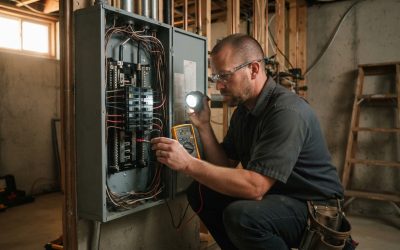
A marine-focused electrical visit generally follows a structured sequence to confirm both function and code compliance.
| Inspection Step | Purpose |
| GFCI and breaker testing | Confirms trip thresholds match code requirements for boat hoist circuits |
| Wiring and conduit check | Identifies corrosion, damaged insulation, or improper wet-location materials |
| Motor and control panel test | Verifies the lift motor receives consistent, correct voltage |
| Grounding and bonding review | Checks continuity between the panel, dock, and lift hardware |
According to guidance published by the National Fire Protection Association, ground-fault protection and periodic testing are central to reducing electrical shock risk around docks and marinas. Waterfront homeowners in Englewood, FL dealing with seasonal humidity and salt exposure benefit from scheduling this type of check annually rather than waiting for a visible failure.
Frequently Asked Questions
How often should a boat lift electrical system be inspected? Annual inspection is a reasonable baseline for most residential docks, with additional checks after major storms or flooding events that may have affected wiring or grounding.
Can a standard residential electrician handle boat lift wiring? Dock and lift wiring falls under a separate section of the electrical code covering ground-fault protection and wet-location materials, so experience with marine or dock-specific work is important.
What causes a boat lift breaker to trip repeatedly? Frequent tripping often points to moisture intrusion, corroded connections, or a ground-fault device detecting a small current leak in the circuit.
Is GFCI protection legally required for boat lifts? Yes. Boat hoist outlets on docking facilities must be GFCI protected where the circuit voltage does not exceed 240V.
Service Area and Next Steps
Based in USA, Mike & Mike Services, Inc. serves customers across Englewood, FL.
Current service area information for mikeandmikeservices.com is published for waterfront electrical work.